Tours
More excursions & tours-

Rome Tourist Card
Rome Tourist Card
Snap up the Rome Tourist Card and you'll get everything you need to explore Rome's top highlights including Colosseum, Palatine Hill, Roman Forum and Hop on/off bus. You can even choose the order you see things in.
read more... -
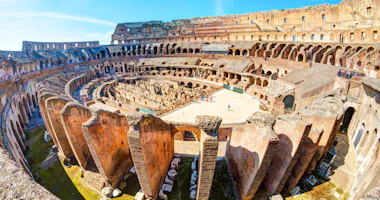
Colosseum, Roman Forum
and Palatine Hill: Skip lineColosseum, Roman Forum
and Palatine Hill: Skip lineSkip the long lines at the Colosseum with this priority-entrance ticket. This ticket will let you bypass the crowds. And after exploring the Colosseum you can head to the Roman Forum + Palatine Hill and enter directly
read more... -

Vatican Museums & Sistine Chapel: Skip The Line
Vatican Museums & Sistine Chapel: Skip The Line
Save time and stress with priority entrance and skip the line. Admire countless masterpieces by Michelangelo, Raphael, Caravaggio, Tiziano, and the Sistine Chapel.
read more... -

Borghese Gallery
Fast TrackBorghese Gallery
Fast TrackGalleria Borghese is located in Villa Borghese park. Admire the architecture and furnishings of this beautiful villa, home to a rich collection of Renaissance art, sculptures, and paintings. Get tickets weeks in advance due to limited capacity.
read more... -

St. Peter's Basilica:
Express Guided TourSt. Peter's Basilica:
Express Guided TourExperience the St. Peter’s Basilica with this express guided tour that includes reserved entrance, allowing you to bypass long lines and make the most of your time.
read more...
Ostia Antica
Ostia Antica is a huge archeological site that was once the main trading harbor of ancient Rome. The city stands out for the excellent preservation of its old buildings, remarkable mosaics and resplendent frescoes. It is known to be one of the oldest archeological site, with findings that date back to the fourth century BC. It served as a trading harbor and at the same time as a naval seaport. Ostia also functioned as a outpost to protect Rome from possible attacks by river.

History
Ostia Antica was founded by King Ancus Martius in 620 BC. It is situated at the mouth of Tiber River, thus named as Ostia that was derived from a Latin word “ostium” which means “river mouth”. It was thought to be the first colony of Rome.
Under the leadership of Tiberius, the city was further developed in the 1st century AD. It was also Tiberius who ordered the construction of the first Forum in the city. Ostia Antica reached its peak in the 2nd century AD with a population of 75,000. During this time, many buildings and structures were constructed in the city. The constructions were initiated by Emperor Hadrian, Trajan and Antoninus Pius. The new buildings were built over the old structures.
During the 4th century, the city was hit by a malaria epidemic, which triggered the people to leave the city. For Ostia, this was the start of its decline. When the Roman Empire ended, the city suffered a further decline. Then, in the 9th century, it was finally abandoned because of the recurrent sacks and invasions.
Interesting Spots in Ostia Antica
- Archeological Scavenger Hunt
- Capitolium
- Cemetery (Necropolis)
- Forum
- House of the Paintings (Insula dei Dipinti)·
- Mill (Mulino)
- Ostia Museum
- Piazza dei Lari
- Piazzale delle Corporazioni (Square of the Guilds)
- Forum Baths (Terme del Foro)
- Porta Romana
- Republican Warehouses (Magazzini Repubblicani)
- Terme di Nettuno (Baths of Neptune)
- Theaters
- Tombs and sarcophagi
- House of Diana (Caseggiato di Diana)

Getting to Ostia Antica
If you come from downtown Rome, getting to Ostia Antica is very easy. With a combination of train and metro rides, you will be able to reach the city in as much as 45 minutes. The ride will cost you just a single ticket per way. You can take the metro line B up to the Piramide metro stop. This metro stop is also the terminal of the train station of Roma Porta San Paolo. Just take one of the trains that head to the Lido di Ostia (Ostia's new town on the beach). Usually, there is a ride every 15 minutes. Along the way, Lido train trips stop at the Ostia Antica station.·
Once you are in the Ostia Antica train station, it will take around five minutes walking to get into the entrance of the site. You simply need to cross the blue sky bridge and walk ahead a little further to Via della Stazione di Ostia Antica. Straight ahead is the parking lot and on the left side is the entrance.
Another great way of easily getting to Ostia Antica is by booking a tour. The booking fee includes all the entrance fees. The tour will be led by a highly experienced guide who speaks English. The tour guide will take with him/her the tickets to make sure everyone can get off at the exact stop. The tour group usually comprises a maximum of 25 people.

Ostia Antica Archaeological Park: Entry + One-Way Shuttle Service
Ostia Antica Archaeological Park: Entry + One-Way Shuttle Service
A few kilometres from Rome, you can lose yourself in the immensity of the Ostia Antica Archaeological Park. The site contains the remains of what was once a thriving commercial port for several centuries. Tickets to the Ostia site allow you to visit an ancient necropolis with tombs from the 2nd...
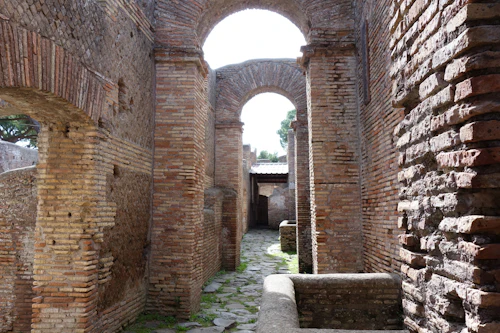
Ostia Antica: pół-prywatna pół-dniowa wycieczka z Rzymu
Ostia Antica: pół-prywatna pół-dniowa wycieczka z Rzymu
Przenieś się w czasie do historycznego rzymskiego miejsca Ostia Antica z tym biletem, zapewniając transport w obie strony z Rzymu na łatwą przygodę. Dołącz do kameralnej grupy kilkunastu entuzjastów historii, aby uzyskać przytulne i wciągające doświadczenie. Dzięki otwartemu biletowi na pociąg...
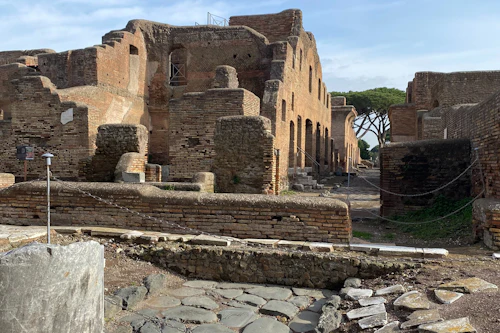
Ostia Antica: wejście bez kolejki + przewodnik audio
Ostia Antica: wejście bez kolejki + przewodnik audio
Poznaj historię Rzymu w Ostii Antica, jednym z największych stanowisk archeologicznych na świecie. Dzięki przewodnikowi audio możesz wędrować we własnym tempie po tym niegdyś zajętym porcie i centrum handlowym z epoki republikańskiej. Śledź starożytne ulice, aby odkrywać dobrze zachowane...
Right after booking, you will be provided with a voucher which will serve as your proof of payment. Keep the voucher and take it with you when joining the tour. In the voucher, you can find complete information about the operator, including the local contact numbers at your destinations.
The tour will usually last a total of four hours. This includes the travel time and a 2.5 hours visit around the site.·
After the tour, you will be given the option to either go back to Rome with the group or stay in Ostia Antica a bit longer. If you choose to stay, your train tickets will be arranged by the operator. There are a lot of things you can do in Ostia Antica. You may continue sightseeing, or enjoy swimming, sunbathing and savoring fresh air at the nearby beach.·

You might also like

Capitoline Museums
Three buildings compose the Capitoline Museums. These group of museums showcase art and architecture collections from Rome in antiquity and the Renaissance.
Read more...
Catacombs in Rome
The Catacombs of Rome are the series of prehistoric mausoleums and the underground cemetery where ancient Romans were buried.
Read more...
Naples
Naples or Napoli is a huge city in Italy and is known as the world’s oldest continually inhabited cities. It is the capital of Campania region.
Read more...
St Peter’s Basilica
St Peter’s Basilica Basilica - The Papal Basilica of Saint Peter in the Vatican, officially known in Italian as Basilica Papale di San Pietro in Vaticano.
Read more...